ALFA PROCOMMUNICATION INFRASTRUCTURE Request a Quote

What is dual-channel fiber optic NO

Dual-channel fiber optic systems use two separate fibers—one for transmitting and one for receiving data—to provide stable, high-bandwidth communication.What is Dual-Channel Fiber Optic?

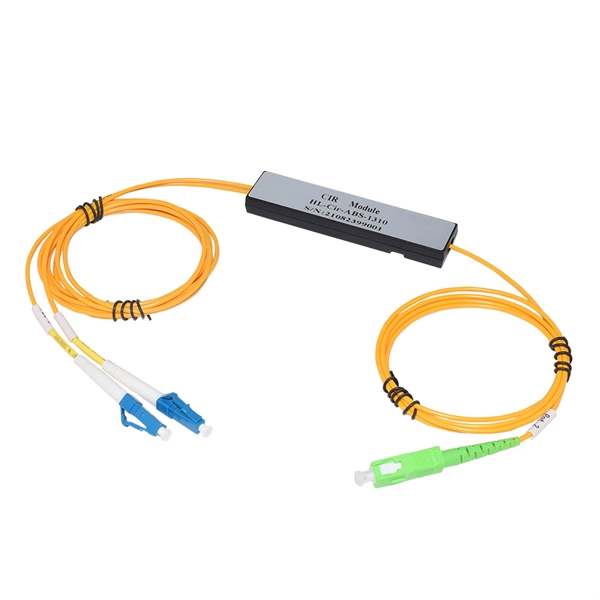
A dual-channel fiber optic system, also called a dual-fiber optical transceiver, employs two separate fiber strands: one dedicated to transmitting (TX) and the other to receiving (RX) data . Each fiber carries the same wavelength in a single direction, ensuring minimal signal interference and high transmission stability. This setup is commonly used in backbone networks, data centers, and long-distance fiber links where reliability and bandwidth are critical .

Key Features
  • Port Configuration: Dual-fiber transceivers have two ports—TX for sending and RX for receiving—typically using a duplex LC interface .
  • Transmission Mode: Unlike single-fiber (BiDi) transceivers that use wavelength division multiplexing (WDM) to send and receive on a single fiber, dual-fiber systems use two fibers for unidirectional communication, simplifying network design .
  • Distance and Performance: Dual-fiber transceivers are ideal for long-distance and high-capacity applications, offering robust performance and reduced signal degradation .
  • Flexibility: Some dual-fiber transceivers can be converted to single-fiber operation if needed, providing adaptability in networks with limited fiber availability .
Advantages Over Single-Fiber Systems
  • Higher Stability: Separate fibers for TX and RX reduce crosstalk and interference.
  • Simpler Wavelength Management: No need for WDM filters or matched BiDi pairs.
  • Scalability: Easier to expand in large-scale deployments with abundant fiber resources.
  • Reliability: Preferred for critical infrastructure like data centers and backbone networks .
Applications
  • Data Center Interconnectivity: Ensures high throughput and low latency.
  • Long-Haul Networks: Supports single-wavelength communication over tens of kilometers.
  • High-Bandwidth Services: Suitable for enterprise networks, telecom backbones, and 5G fronthaul deployments . In summary, dual-channel fiber optic systems provide a reliable, high-performance solution for transmitting and receiving data over separate fibers, making them ideal for large-scale, high-capacity, or long-distance network applications. They are simpler to manage than single-fiber BiDi systems and are widely used where fiber resources are sufficient.
What is dual-channel fiber optic NO

Fibre Channel

OverviewMedia and modulesEtymologyHistoryCharacteristicsTopologiesLayersPorts

The Fibre Channel physical layer is based on serial connections that use fiber optics to copper between corresponding pluggable modules. The modules may have a single lane, dual lanes or quad lanes that correspond to the SFP, SFP-DD and QSFP form factors. Fibre Channel does not use 8- or 16-lane modules (like CFP8, QSFP-DD, or COBO used in 400GbE) and there are no plans to use these expensive and comple

Multi-core Fibers – dual core, twisted, space division multiplexing

How to couple light in and out of multiple fiber cores? A substantial technical challenge for the industrial use of multi-core fibers is the

Related Video Reference

This video was associated with the source search result. Verify technical details against current product documentation and project requirements.

Technical note

This reference is intended for preliminary fiber and communications infrastructure research. Optical interface, fiber type, port or core capacity, electrical input and output, enclosure protection, cooling, installation limits and applicable standards must be verified for the specific project.

Still Have a Technical Question?

Use the inquiry form to describe the product category, application, interfaces, capacity and installation environment.

Start a Project Inquiry