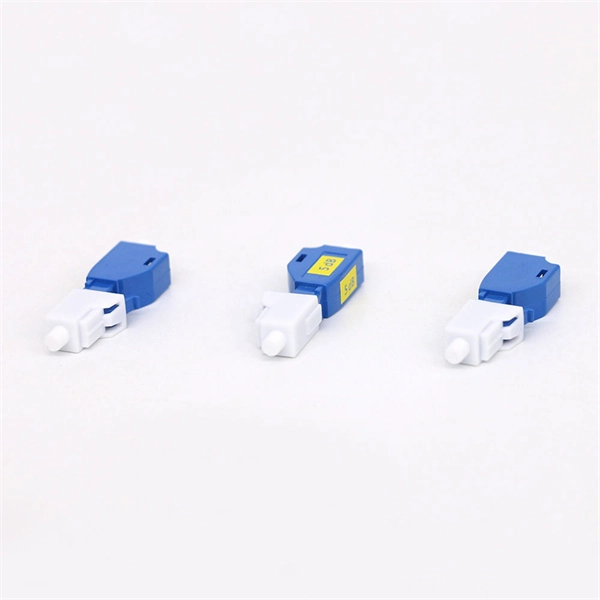
Optical cable connectors consist of a ferrule, connector body, and mating mechanism, designed to align and protect fiber ends for efficient light transmission.Core Components
1. Ferrule: The ferrule is the central component that holds the optical fiber in precise alignment. Typically made from zirconia ceramic due to its high dimensional accuracy, mechanical strength, and thermal stability, the ferrule ensures that the fiber core is positioned correctly to minimize signal loss. The tip of the ferrule is precision-polished (PC, UPC, or APC) to reduce reflection and insertion loss, which is critical for maintaining high-quality optical communication . 2. Connector Body: The connector body encases the ferrule and fiber, providing mechanical support and protection. It maintains the correct bending radius of the fiber and shields the internal components from physical damage. Materials used include engineering plastics or metals, depending on the application and required durability . 3. Mating Mechanism: This mechanism allows the connector to securely attach to another connector or adapter, ensuring stable optical contact. Common mechanisms include push-pull latches (SC), snap-in latches (LC), or threaded couplings (FC). Most connectors are spring-loaded, pressing the fiber ends together to maintain consistent contact and minimize optical loss .
Additional Structural Features
- Alignment Sleeves: Used in adapters to precisely align ferrules from two mating connectors.
- Polishing Types: PC (Physical Contact), UPC (Ultra Physical Contact), and APC (Angled Physical Contact) affect return loss and signal reflection. APC connectors, for example, are angled to reduce back reflection in high-performance networks .
- Multi-Fiber Connectors: MPO/MTP connectors handle multiple fibers (8, 12, 24) in a single ferrule, enabling high-density, high-speed network connections .
Functionality
Optical connectors are designed to:
- Form a continuous optical path with minimal insertion loss.
- Allow repeatable connection and disconnection without degrading performance.
- Interface with active or passive devices in telecommunications, data centers, and industrial networks .
Applications
These connectors are widely used in FTTH networks, data centers, DWDM systems, and optical sensor applications, providing flexibility and reliability in optical communication systems . Proper selection, installation, and maintenance of connectors are essential to ensure low insertion loss, high return loss, and long-term network performance.